Aviation
Digitizing Aircraft Maintenance:
Replacing the Pink Slip
Under
Zenia Mobile
Client
Akasa Air (Rishabh Verma)
Project Overview
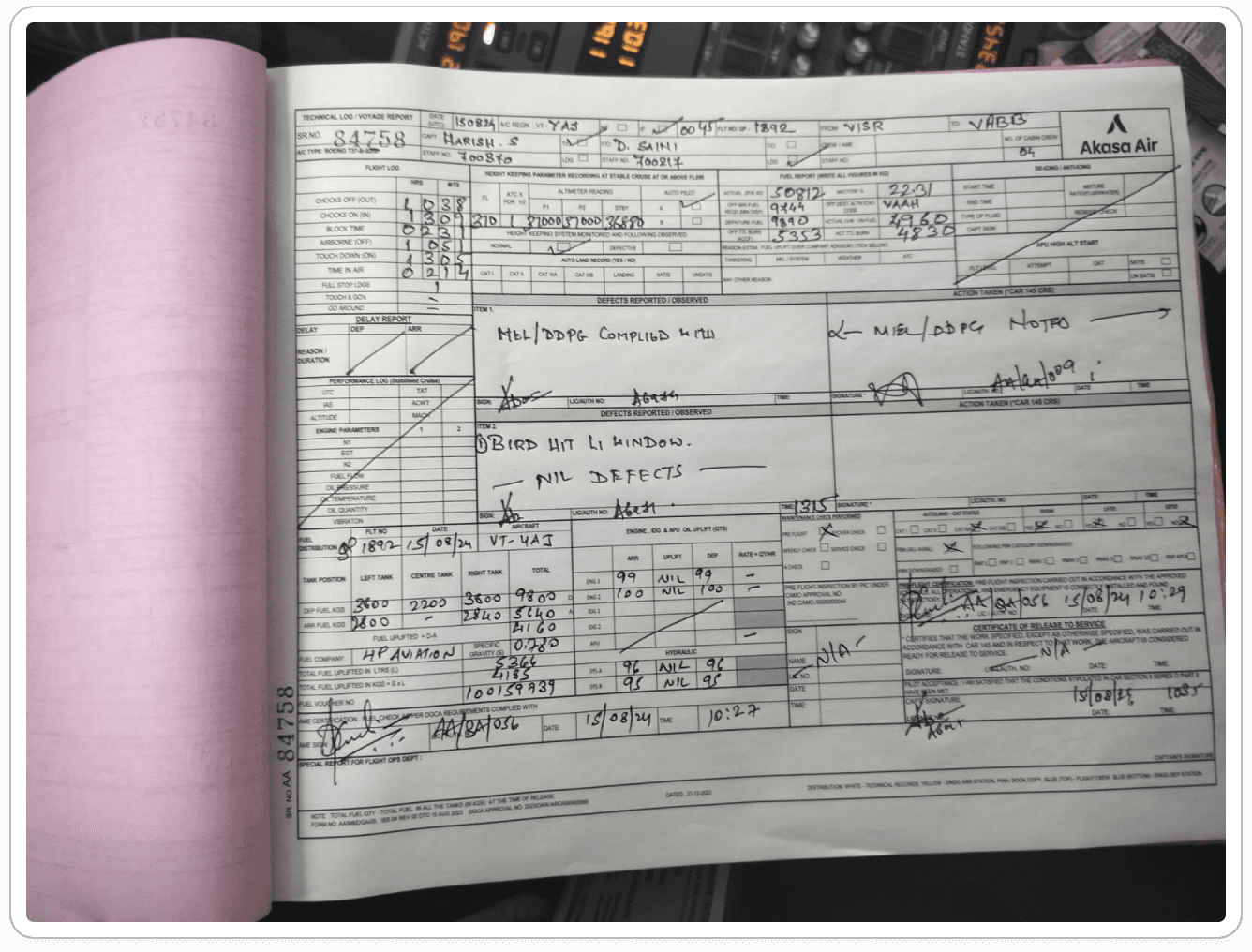
This project focused on digitizing aircraft maintenance records, which were traditionally documented using physical pink slips. The aim was to transform this analog system into a streamlined digital workflow without disrupting the habits of pilots and technicians.
Understanding the Existing Workflow and User Roles
The first step involved identifying all the fields present in the pink slip and understanding when different user roles—pilots, technicians, and supervisors—interacted with the process. With only a scanned pink slip provided by the client and no direct access to aviation staff, reverse-engineering the system was the foundation of our design strategy.
Solution
Step 1
Creating Early Wireframes to Set Expectations
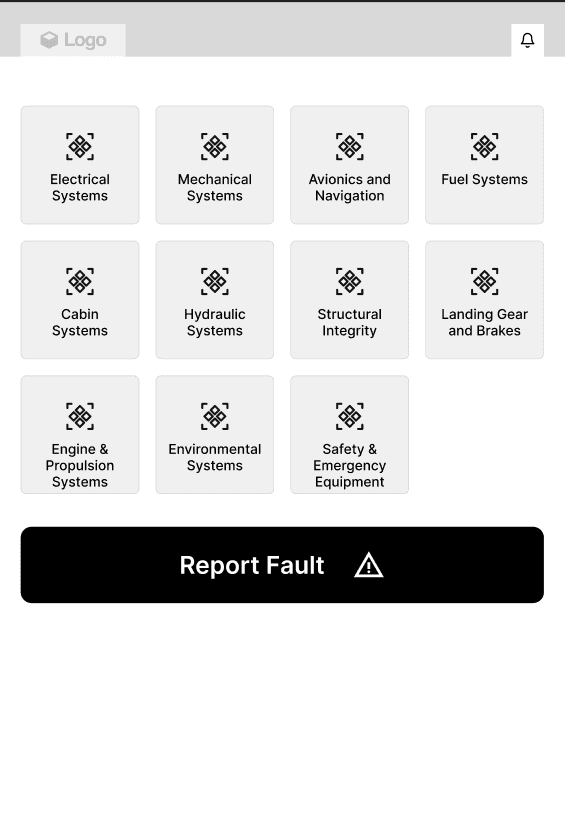
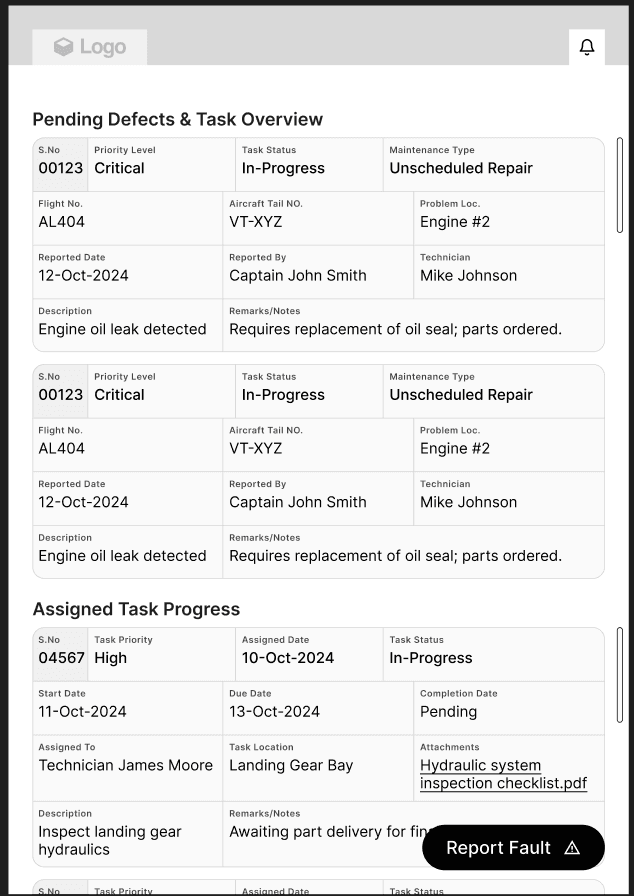
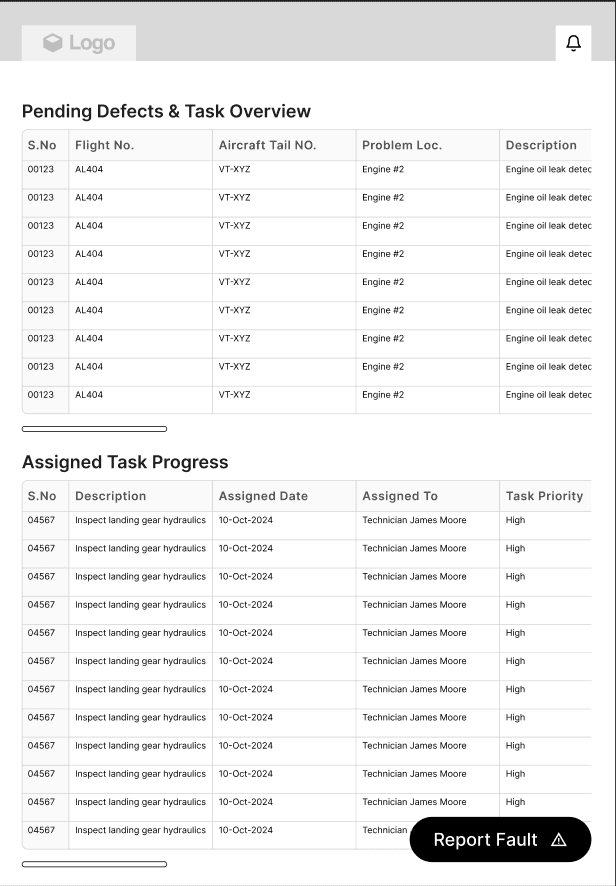
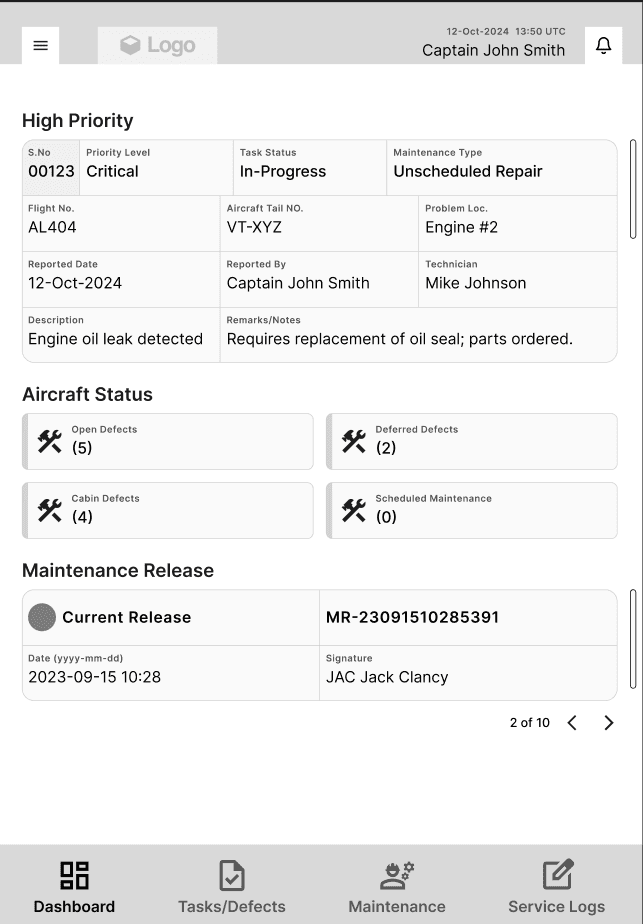
Initial wireframes were developed to align with the client’s expectations and establish a design direction. Various layout inspirations, including spreadsheet-style tables and Gmail-like cards, were explored. The final preference turned out to be a hybrid that balanced familiarity with usability.
Key Insight
Collaborative iteration during this phase helped set a strong visual language and information structure, reducing misalignment later in the process.
Step 2
Designing the Dashboard as a Narrative Anchor
A dedicated dashboard was created early in the process, as clients often perceive it as a reflection of the overall product. This component underwent multiple design iterations, gradually refining usability, clarity, and visual hierarchy.
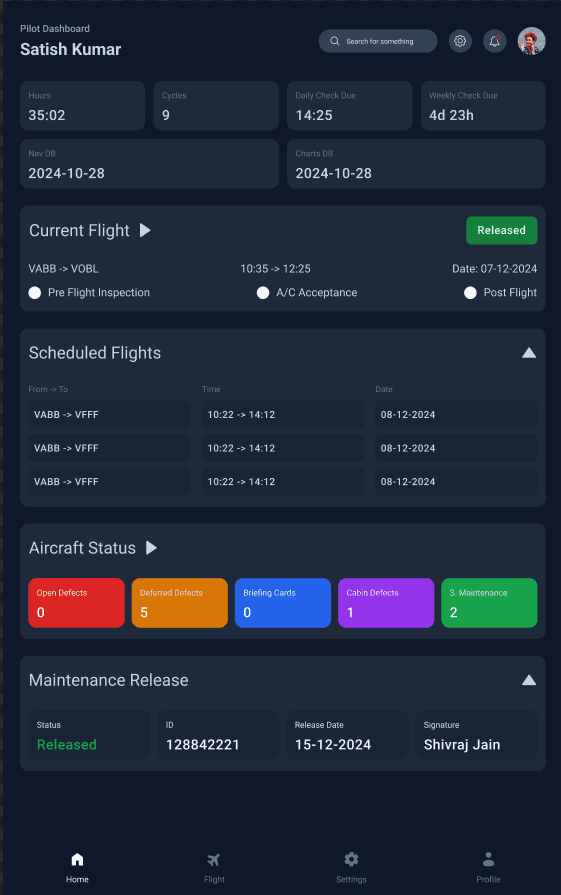
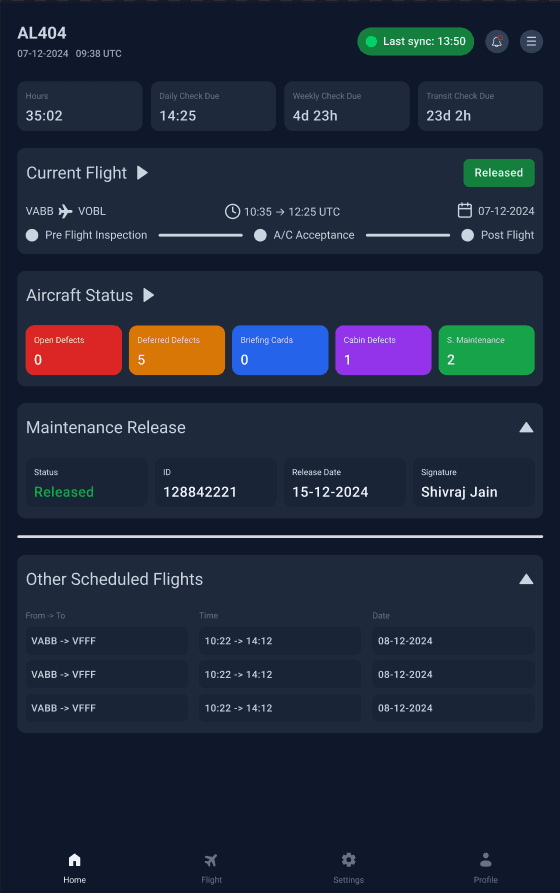
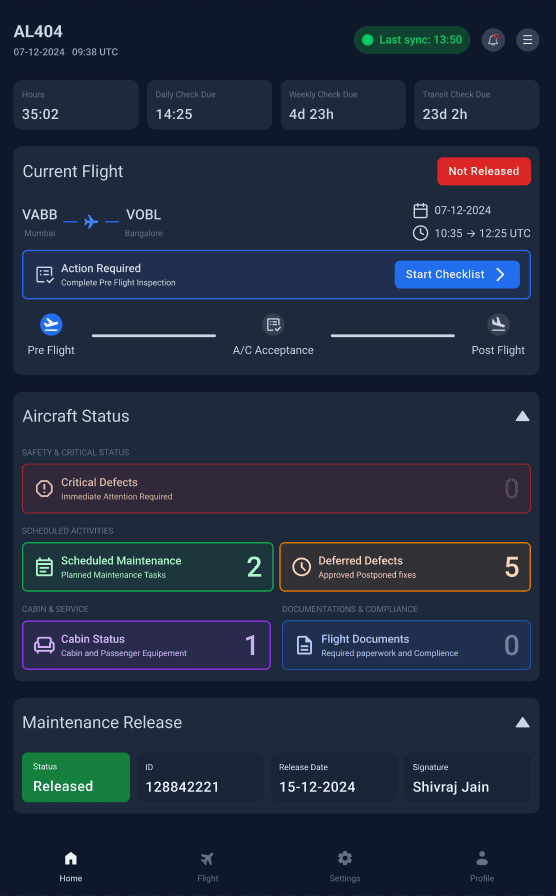
Finalized Designs after 11 Iterations
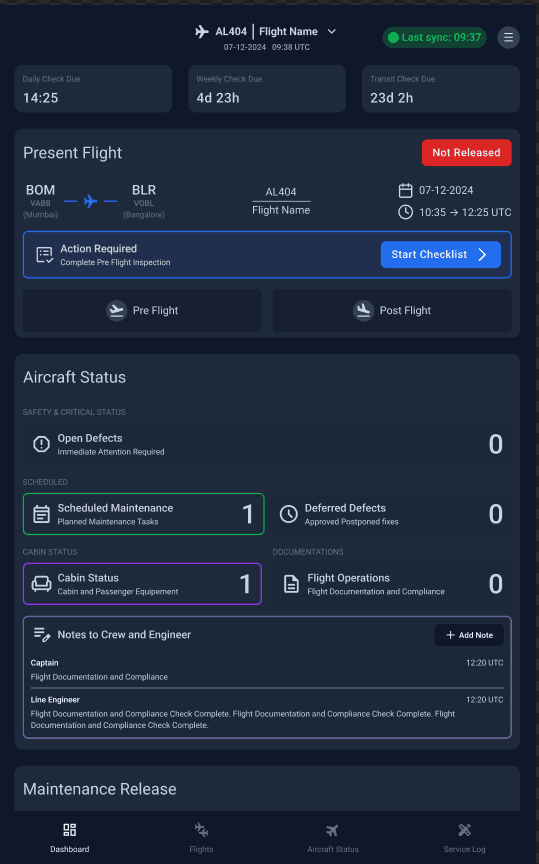
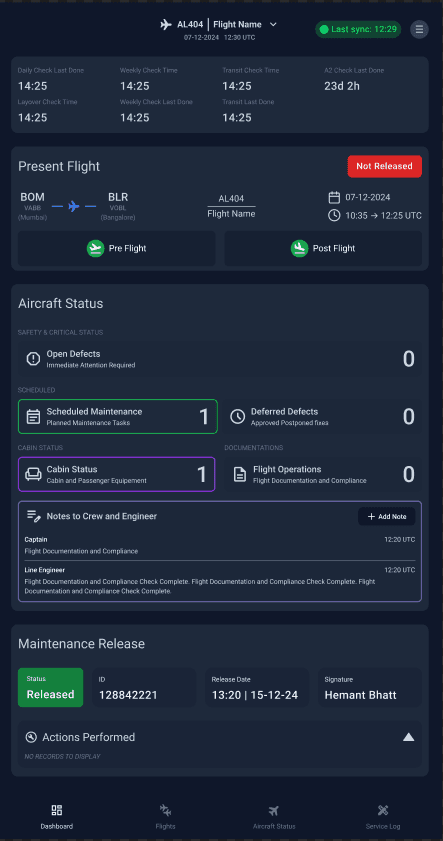
Requirements changed while design the High-Fi Designs.
Key Insight
The dashboard helped communicate the tone and style of the final application. It became a reference point for designing the rest of the screens.
Step 3
Streamlining the Flight Inspection Workflow
Originally, the pink slip documented three separate stages: Pre-Flight Inspection, Aircraft Acceptance, and Post-Flight Inspection. After detailed discussion, this process was restructured into two stages without losing any critical functionality. Approval responsibilities were redistributed between the revised Pre- and Post-Flight phases.
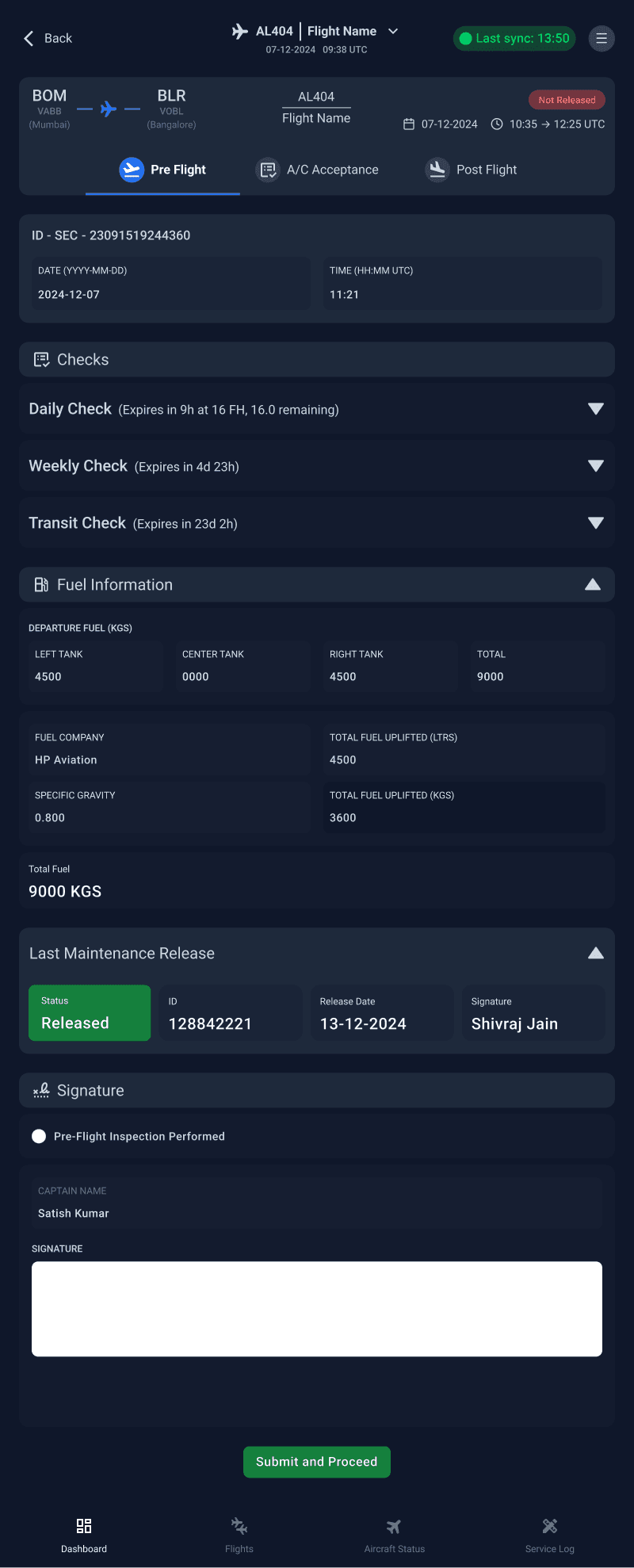
Pre Flight Inspection

A/C Acceptance
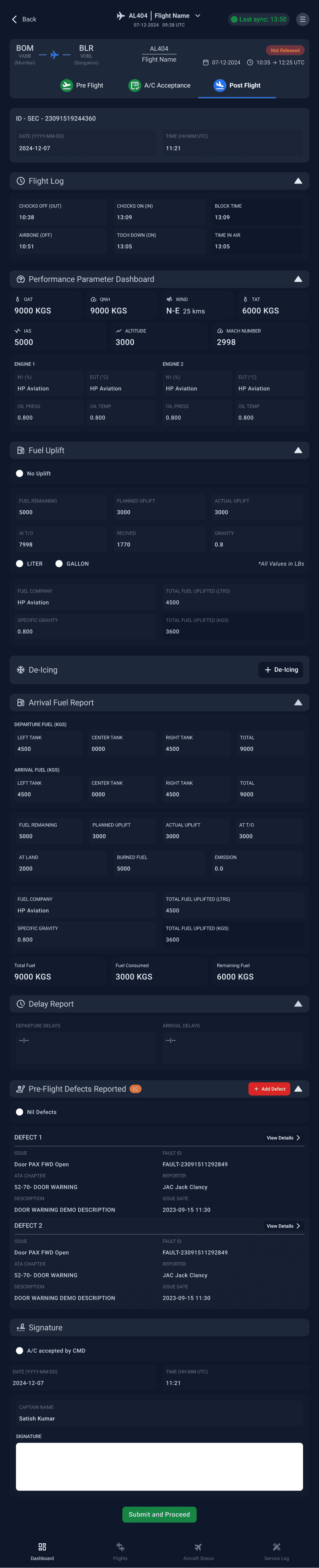
Post Flight Inspection
Key Insight
This was the most research-intensive step, involving deep analysis and extensive client interaction. By the end, we had a comprehensive understanding of the original analog workflow.
Step 4
Designing Pilot Interfaces for Inspections
With a solid understanding of the flight inspection workflow, the pilot’s digital screens were designed. Rather than replicate the pink slip’s table-like layout, data was regrouped and reordered for a more intuitive user experience. Visual cues like icons and metrics were introduced for better navigation and quicker comprehension.

Pre Flight Inspection
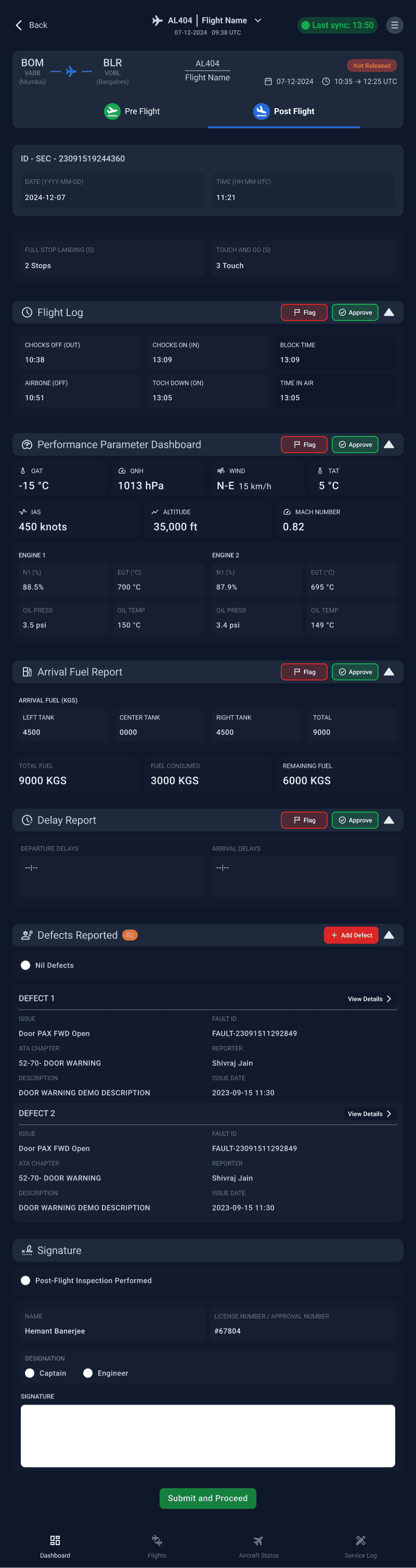
Post Flight Inspection
Key Insight
The groundwork laid in the previous step significantly streamlined this phase. Understanding user priorities allowed us to create a flow that mirrored the pilot’s mental model.
Step 5
Creating a Clear and Focused Technician Workflow
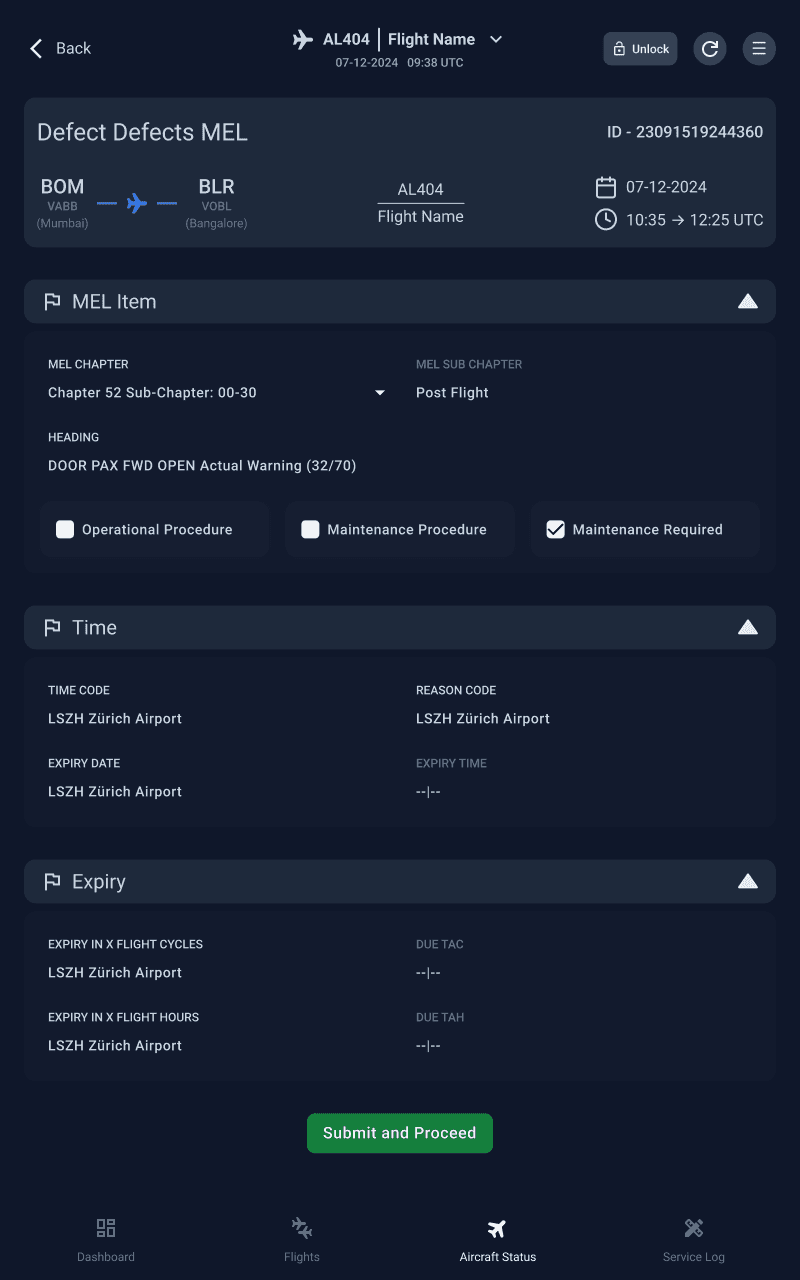
Next, the technician’s interface was designed to surface relevant maintenance issues and enable seamless resolution. By filtering out unnecessary data and contextualizing each task, the technician’s experience was drastically simplified while maintaining full functionality.
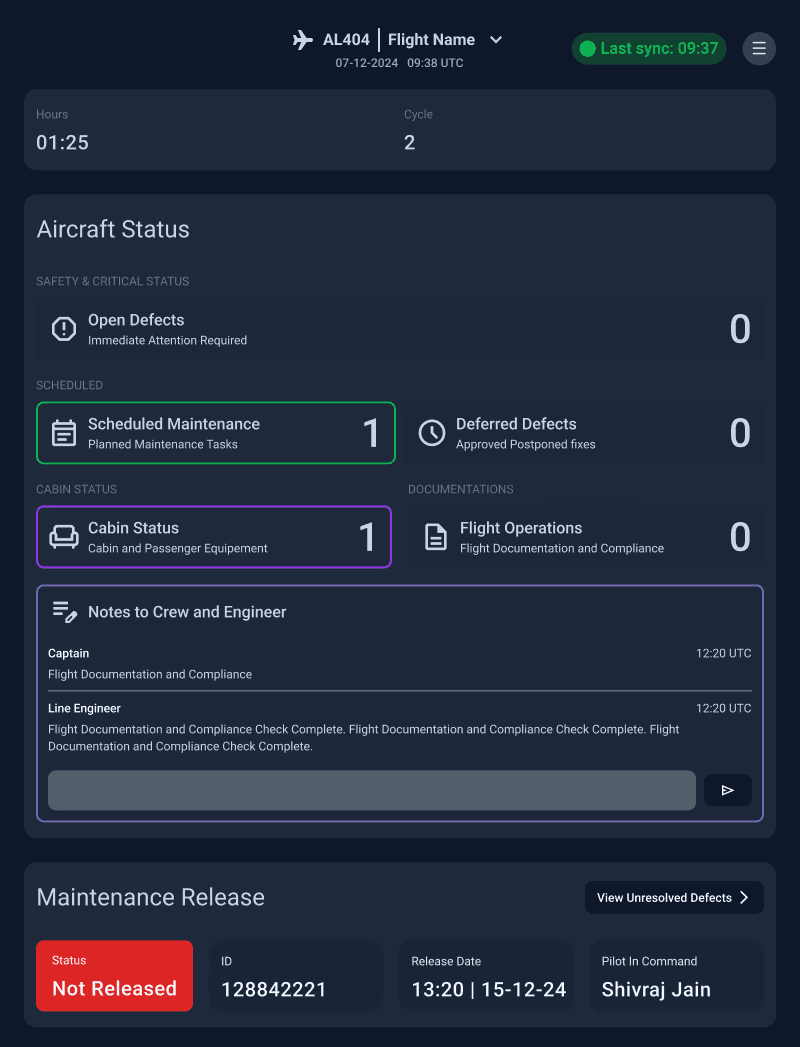
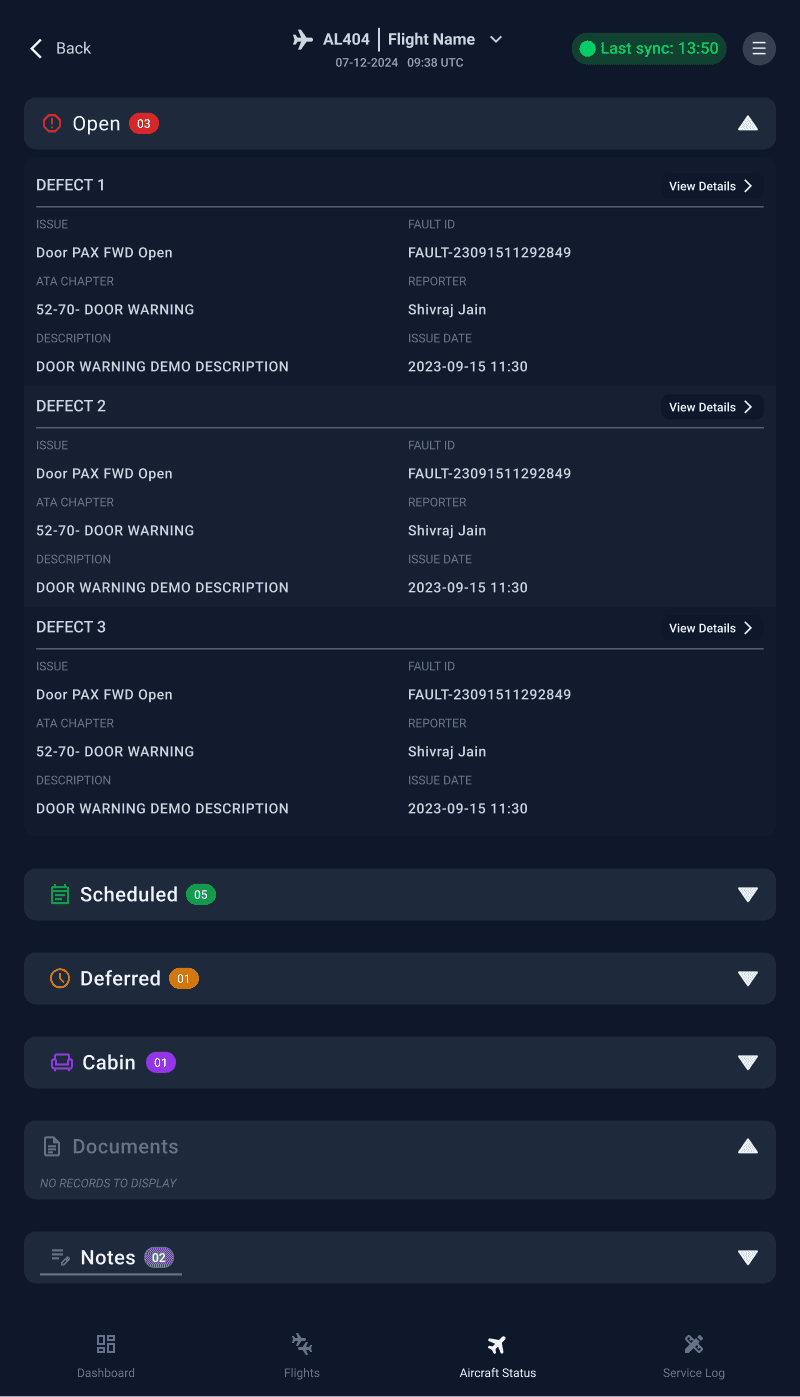
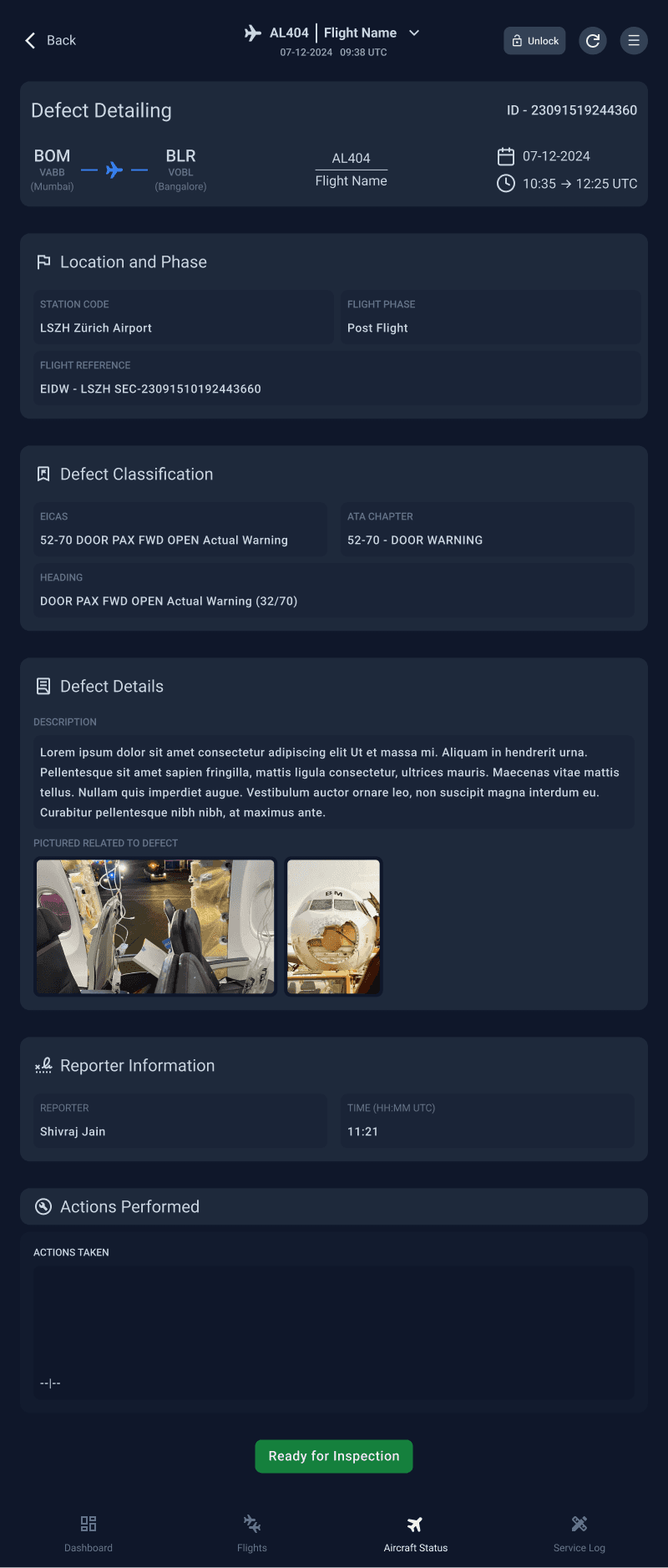
Key Insight
With a well-defined process map and user role clarity, designing the technician’s interface became a straightforward task that built naturally on earlier steps.
Developer Handoff Considerations
To facilitate a smooth developer handoff, data tables were clearly mapped to each field, allowing easy API integration. Previous appointment details were displayed using a grid layout similar to traditional tables, maintaining familiarity while improving structure.