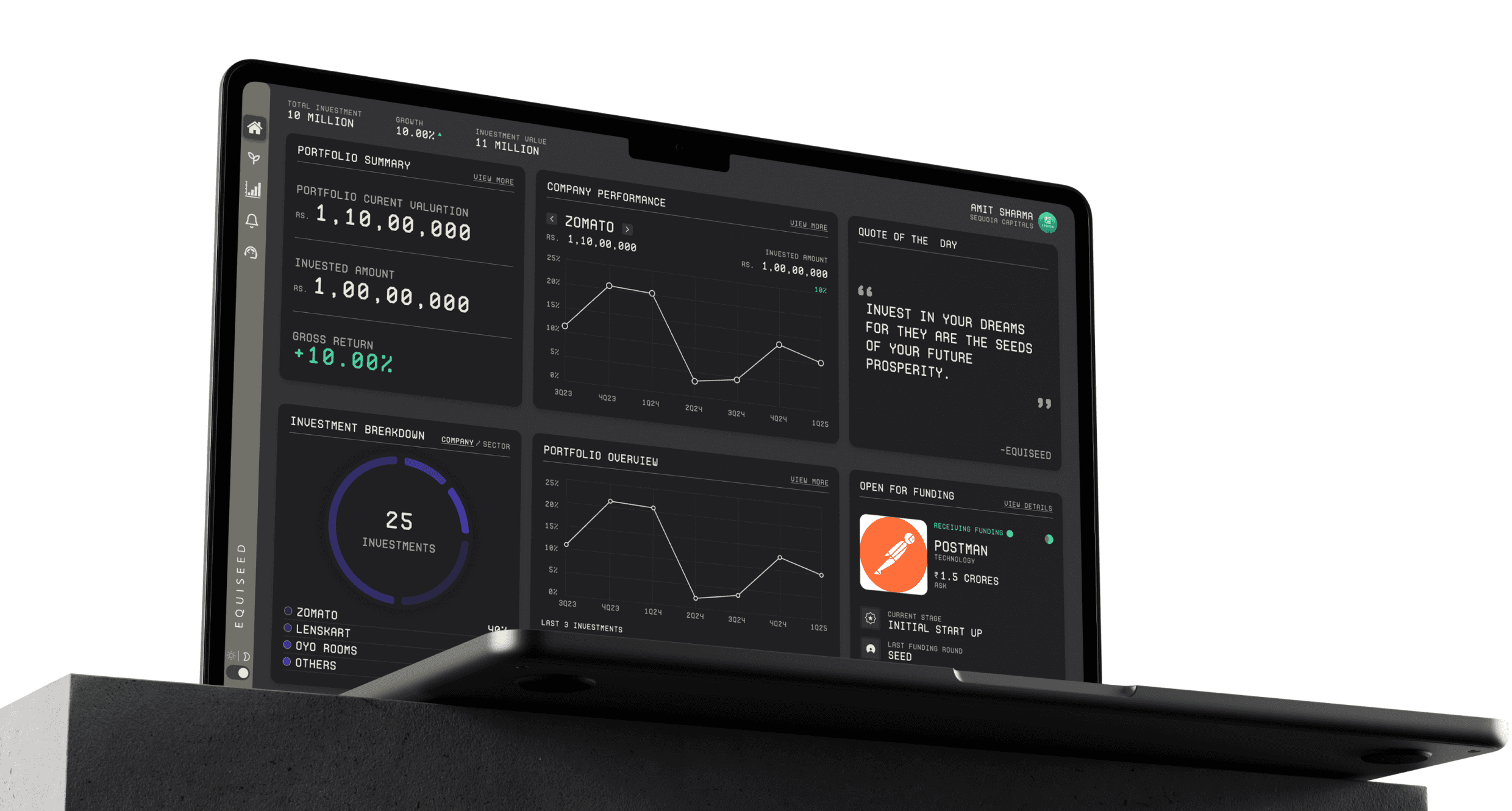
The Problem & The Hook
Retail investment platforms typically optimize for low-friction, micro-investing.
This Product challenged this by targeting early-stage professionals for high-ticket investments ranging from ₹50,000 to ₹5,00,000. The primary challenge was building a high-trust, institutional-grade environment from scratch while navigating extreme typographic constraints—using only the Proto font family. The goal was to communicate complex financial data with absolute precision without overwhelming the "starter" investor.
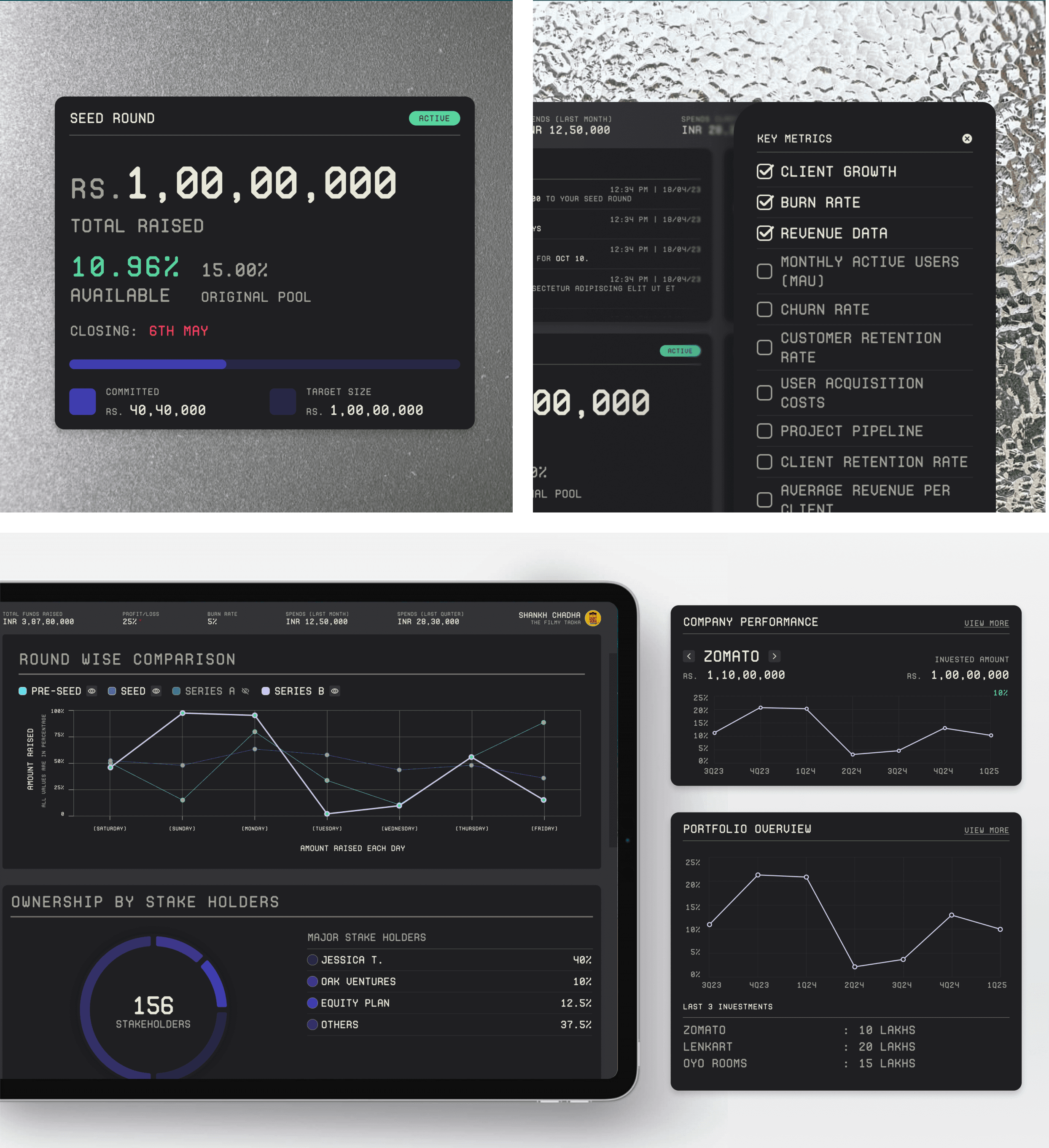
The Systemic Approach: Brutalist Information Density
To solve for long-term scalability and data density, I developed a Slot-based Component Architecture. Given the limitation of a single font family and a restricted palette, the system relied on mathematical hierarchy:
Typographic Hierarchy: Used font size and opacity (60%/80%/100%) as the primary variables to create visual depth and information importance.
Modular Slot Logic: Dashboard cards were designed as flexible containers with standardized "slots" for data viz (progress bars, donut charts, and metrics), allowing the platform to scale from a single fund to a multi-startup marketplace without a UI overhaul.
LinkedIn Data Enrichment: Integrated LinkedIn as a mandatory professional verification layer to verify professional status and enrich investor profiles, ensuring the platform's high-ticket pedigree.
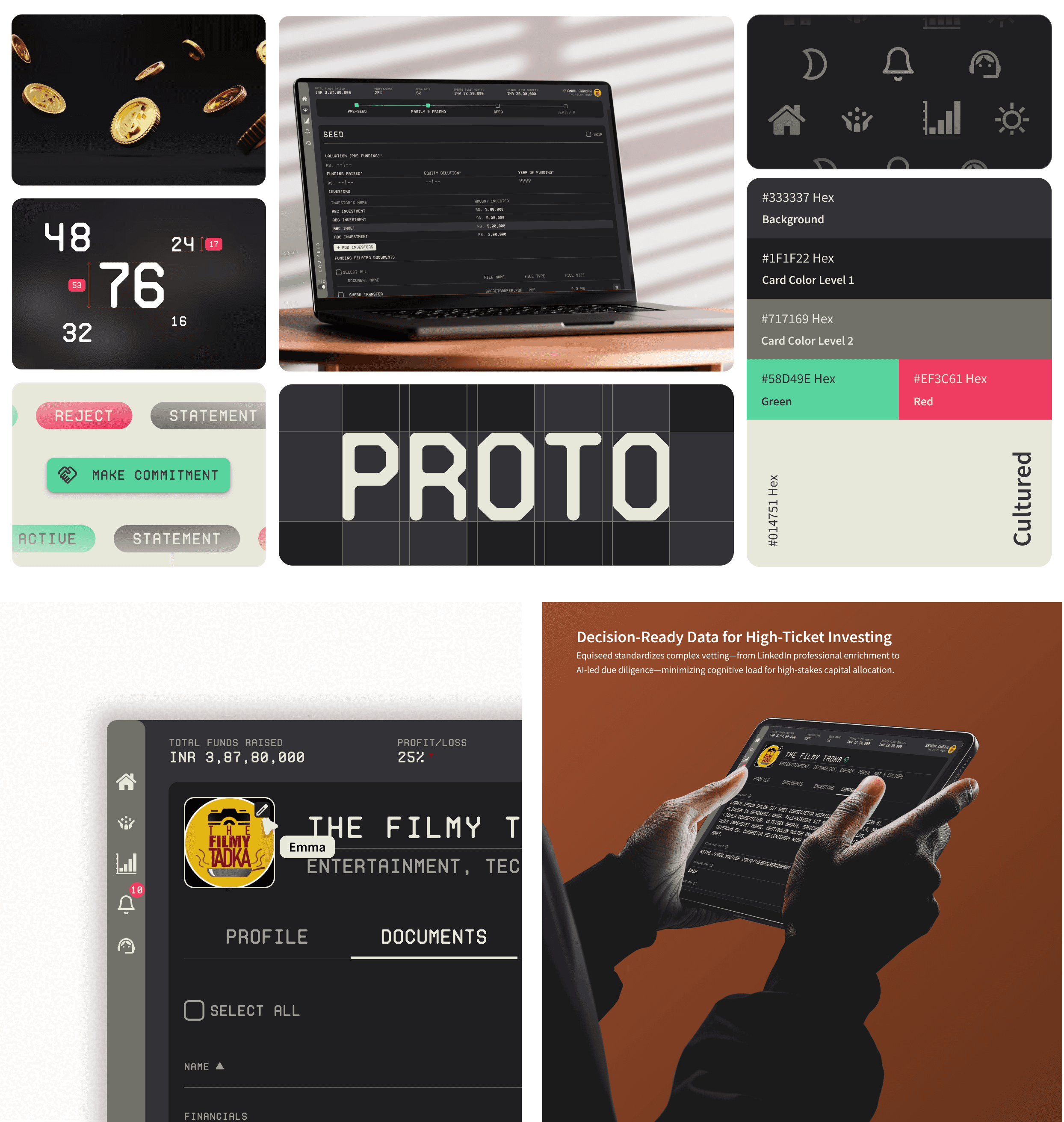
Platform-Specific Execution: Desktop-Optimized Funnel
The product was built as a dedicated Webapp, leveraging desktop real estate for complex data comparison and high-density workflows:
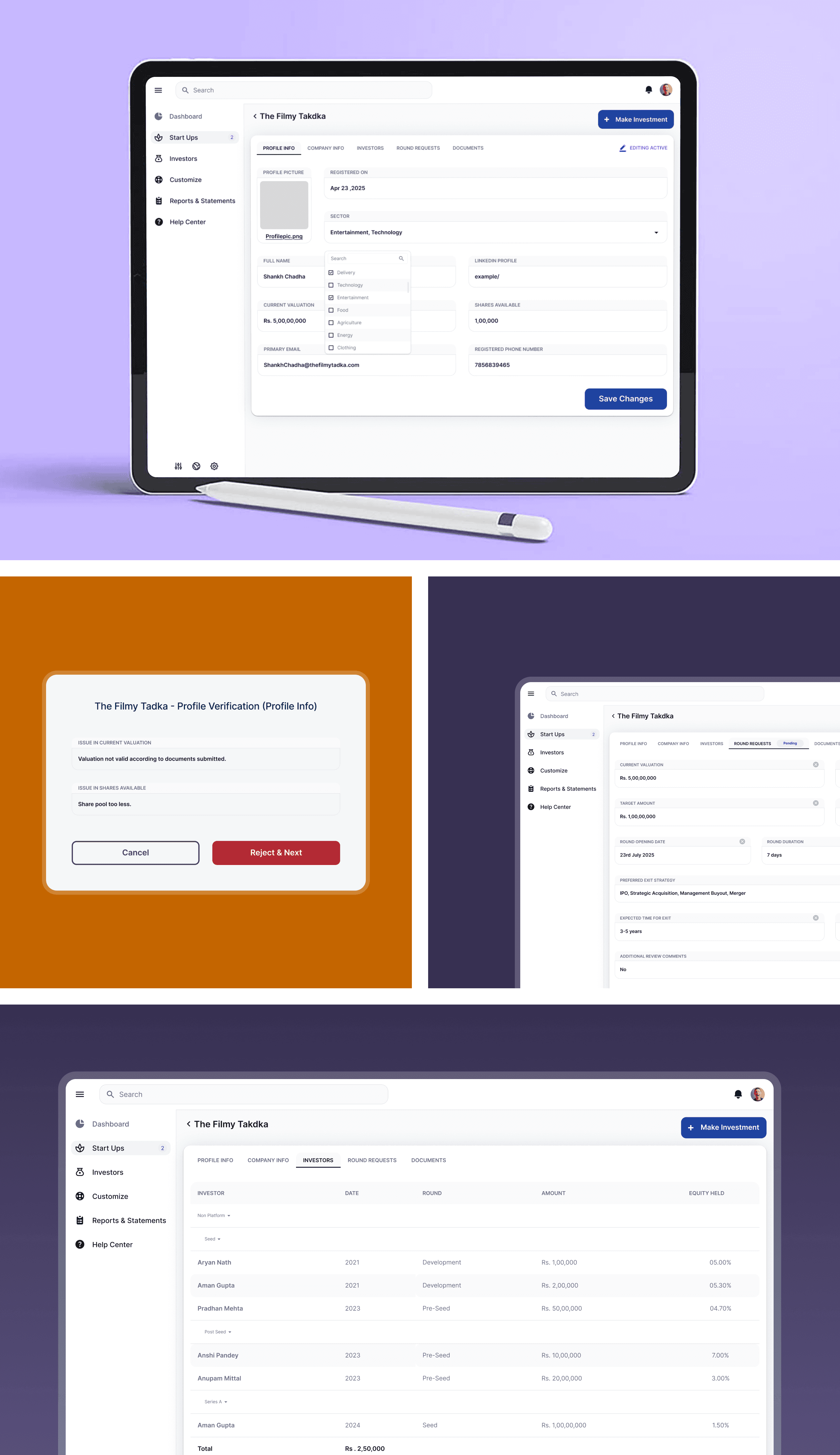
AI-Human Hybrid Verification: Startups' documents were pre-screened by AI to generate improvement recommendations, which were then verified by a human through the Admin Dashboard before going live.
Investment "Pledge" Mechanism: The flow included intentional "Positive Friction"—allowing users to review summaries and review entries at the end of form-filling to ensure control over large capital commitments.
State Management: The dashboard utilized a Status Tracker card that evolved from a "Commit" CTA to a tracking module, utilizing the F-pattern reading logic to anchor the user's "Investment Value" and "Growth" in the top-left for immediate clarity.
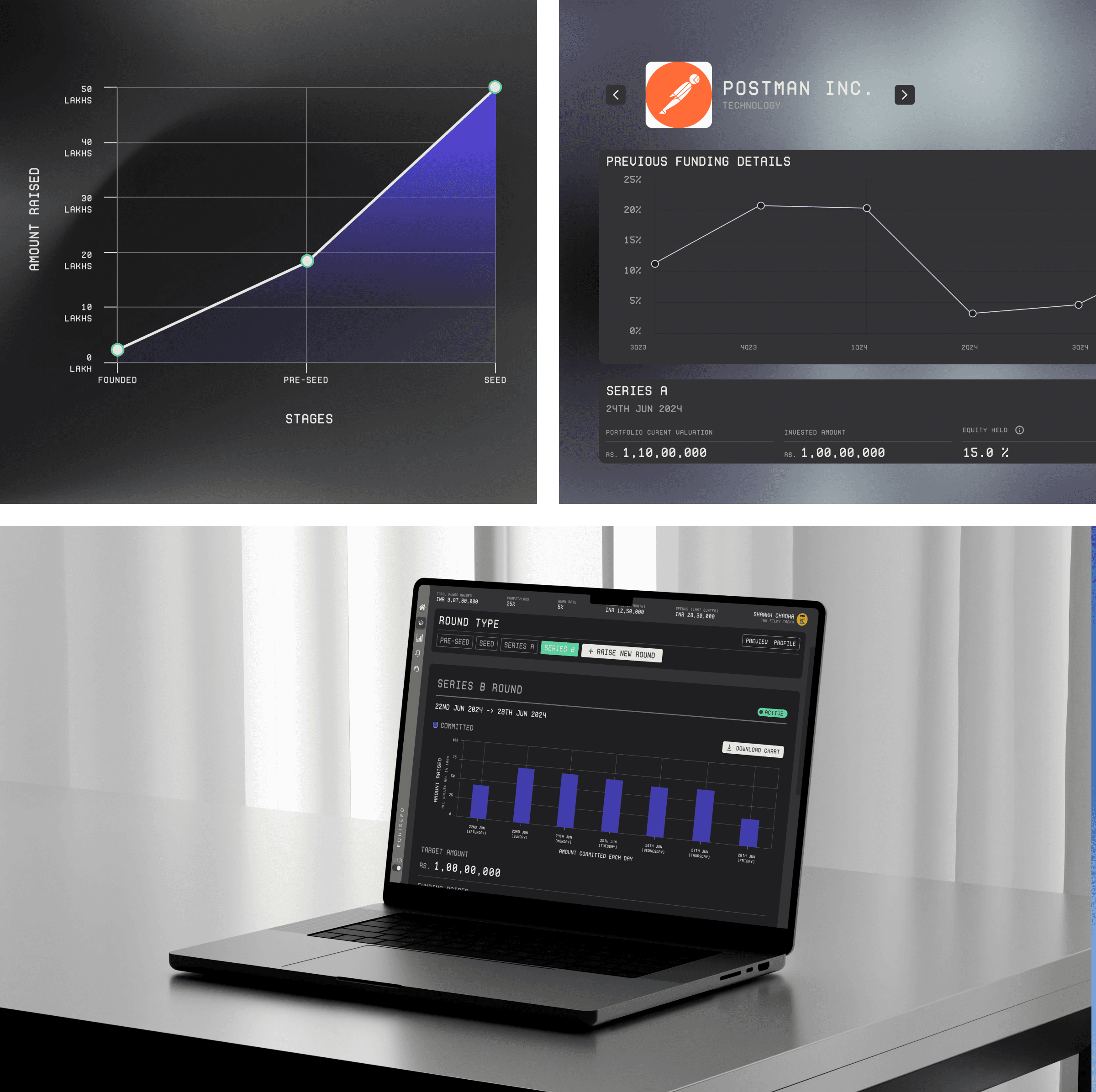
The "Dev-Ready" Maker-Checker Infrastructure
To manage systemic risk, I designed a robust Admin-side Information Architecture featuring a Maker-Checker workflow:
Security Protocol: No high-value transaction or startup listing could go live without dual-authorization (one admin proposes/verifies, a second admin approves).
Verification States: Designed specific UI logic for the admin to review high-value transactions, where the font size and top-left placement acted as the primary differentiating factors for rapid auditing.
Documentation: Narrated the complex state dependencies—such as the transition from "Pending Verification" to "Active Investor"—directly to the development team to ensure logic fidelity in the final build.
The Outcome
Professional Trust: The monospaced aesthetic and tabular alignment created a "Bloomberg-level" sense of security for novice investors.
Scalable Framework: The modular slot system allowed the client to easily replace and add new parts to the system as the investment pool grew.
Operational Integrity: The Maker-Checker and AI-Human hybrid flows minimized human error and fraudulent listings in a high-stakes financial environment.